Introduction:
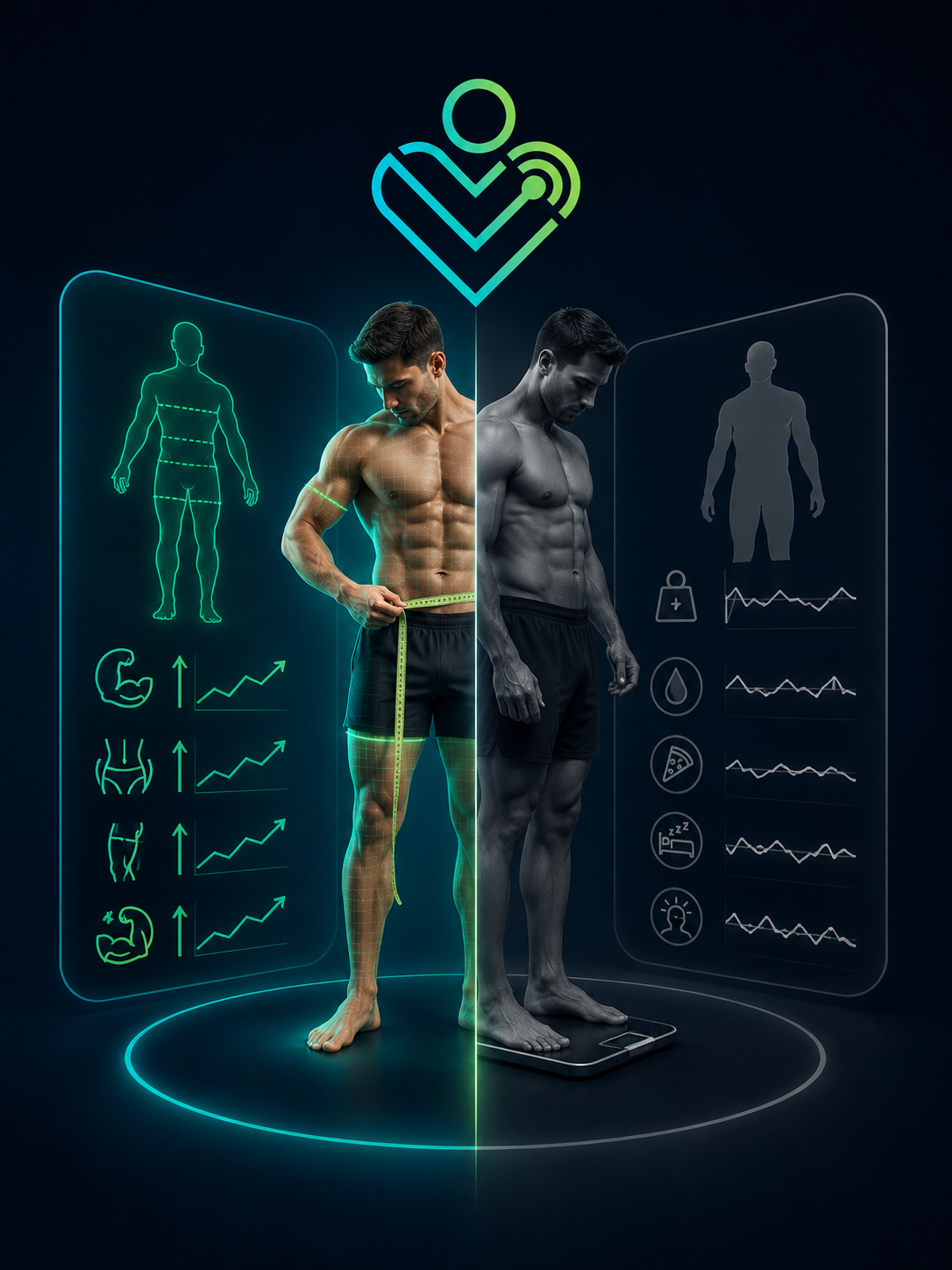
Many people rely solely on the scale to track their progress, but weight alone doesn’t tell the whole story. Measuring your body using metrics like waist, hips, and body fat percentage provides a more accurate view of changes in body composition.
Why Weight Alone Can Be Misleading:
- Weight fluctuates daily due to water, food, and glycogen levels
- Muscle weighs more than fat, so gaining muscle may not reduce scale weight
- Scale doesn’t distinguish between fat loss and muscle loss
Benefits of Body Measurements:
- Tracks fat loss and muscle gain more accurately
- Helps monitor changes in specific areas (waist, arms, hips)
- Provides motivation when scale weight stays the same
How to Measure Your Body Effectively:
- Use a flexible tape measure
- Measure key areas: waist, hips, chest, arms, thighs
- Take measurements at the same time of day
- Track changes weekly or bi-weekly
- Combine with progress photos for visual feedback
Understanding Body Fat Percentage:
- Indicates the proportion of fat relative to total body weight
- Can be measured using calipers, bioelectrical impedance, or professional scans
- More meaningful than scale weight for health and fitness goals
Conclusion:
Measuring your body provides a more accurate and detailed picture of your fitness progress than relying on scale weight alone. By tracking measurements, body composition, and visual changes, you can make informed adjustments to your diet and training, leading to better long-term results.